What might be happening
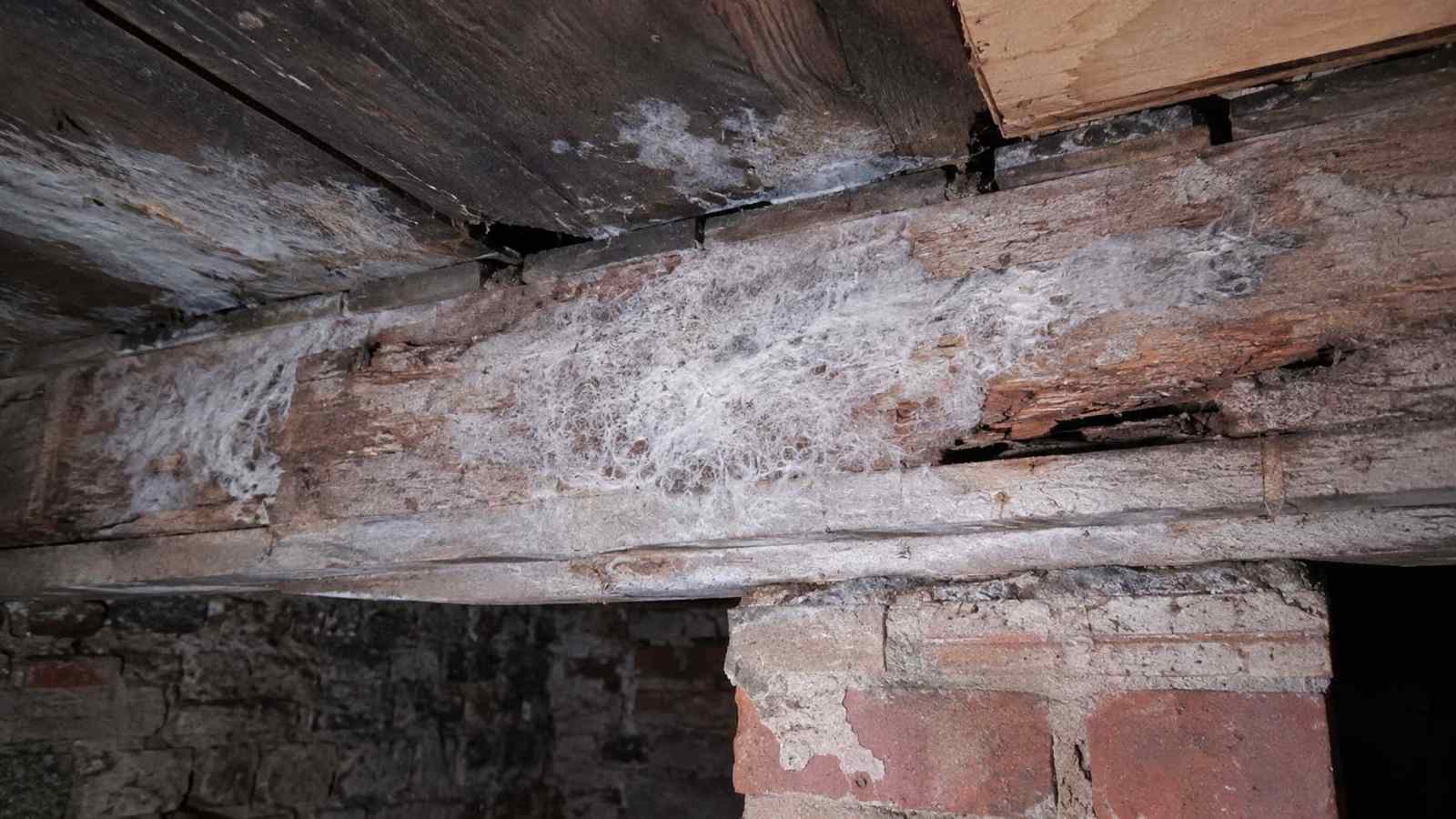
Some fungal mycelium looks cottony, while salts, dust and other deposits can be misleading.
An unusual smell, growth or patch of discoloured timber is worth investigating. It does not, on its own, tell you exactly what has happened or how serious it is.
What you can look for
Check whether there is a persistent damp source and look at surrounding timber, masonry and signs of breakdown.
You do not need to start taking the building apart yourself. If access is difficult, ask the person inspecting it to explain what needs to be opened up and why. Photographs of hidden defects are useful, especially when you are comparing quotations.
Putting it right
Have suspect fungal growth identified if decay is possible; repair water defects and unsound timber as required.
Be wary of a quotation that deals only with the damaged wood and says nothing about the water or building defect behind it. Once the cause has been dealt with, the remaining timber can be checked and the necessary repairs planned.
When to call someone in
Do not scrape and spray the growth without checking what is feeding it.
A carpenter or joiner may be right for a local timber repair. If the problem involves a leak, you may need a plumber or roofer first. Where supporting timbers have moved, sagged or seriously weakened, get advice from someone qualified to assess the structure.
Questions worth asking
- What might be causing this sign, and how can we check?
- Does any timber need opening up to examine it properly?
- Is there a moisture problem or structural concern that needs dealing with now?