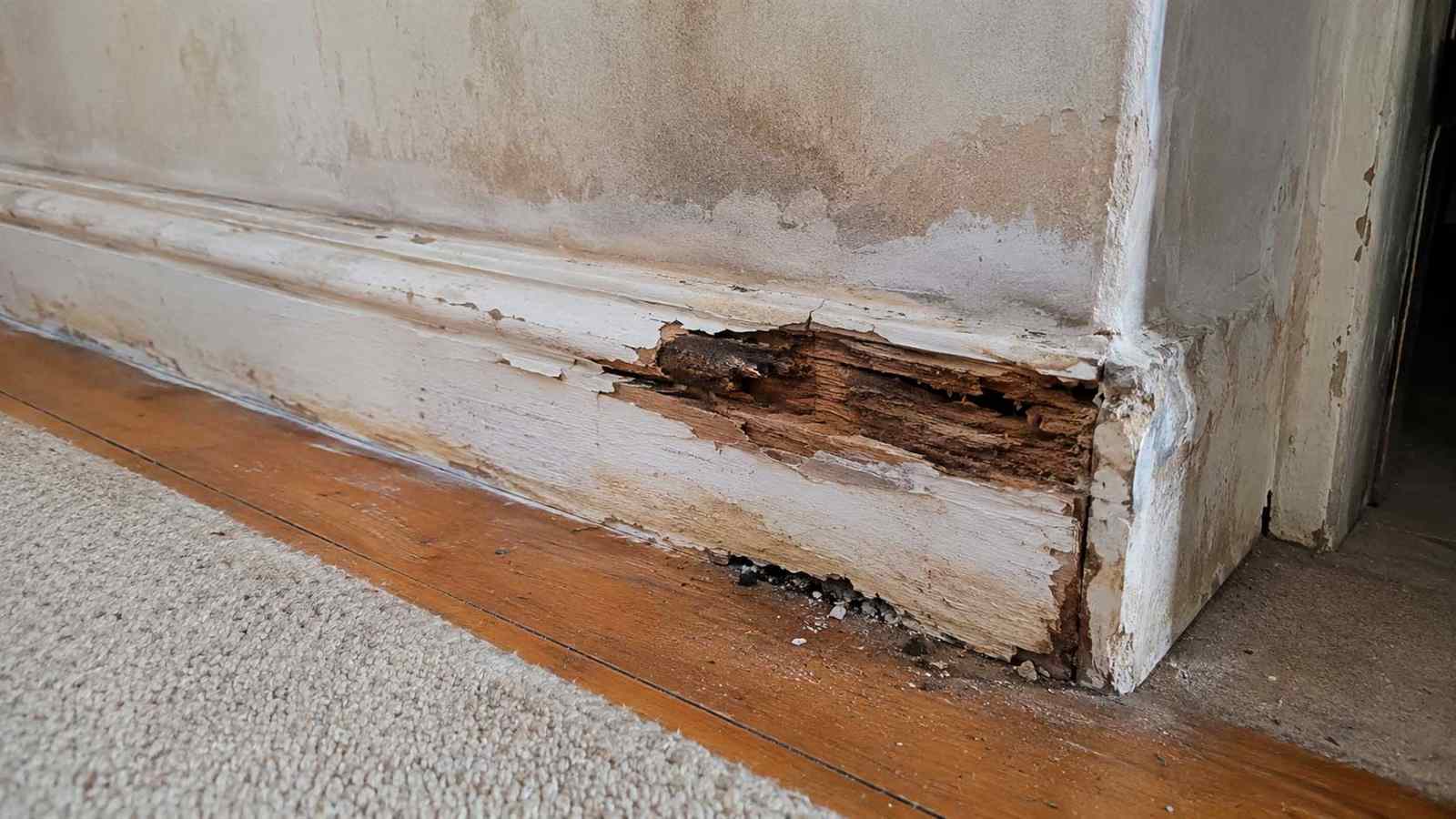
What might be happening
Moisture might come from a leaking pipe, penetrating rain, a plumbing fixture or damp at floor level; the skirting itself does not reveal the source.
Timber around openings and at the bottom of walls takes a lot of punishment from water. The part you can see may not be the only affected area, particularly where timber disappears behind plaster or masonry.
What you can look for
Compare rooms, inspect adjacent plumbing and external defects, and check what is happening behind the skirting where appropriate.
You do not need to start taking the building apart yourself. If access is difficult, ask the person inspecting it to explain what needs to be opened up and why. Photographs of hidden defects are useful, especially when you are comparing quotations.
Putting it right
Stop moisture entry, allow the wall and floor to dry, then replace damaged sections.
Be wary of a quotation that deals only with the damaged wood and says nothing about the water or building defect behind it. Once the cause has been dealt with, the remaining timber can be checked and the necessary repairs planned.
When to call someone in
A high moisture-meter reading on plaster is not, by itself, proof of rising damp.
A carpenter or joiner may be right for a local timber repair. If the problem involves a leak, you may need a plumber or roofer first. Where supporting timbers have moved, sagged or seriously weakened, get advice from someone qualified to assess the structure.
Questions worth asking
- Where is the rainwater or other moisture getting in?
- How much of the frame or concealed timber remains sound?
- Can the damaged part be repaired without replacing the whole assembly?